Reading the Room: What Happens During a Great Salon Consultation — and How to Know You've Found Your Stylist
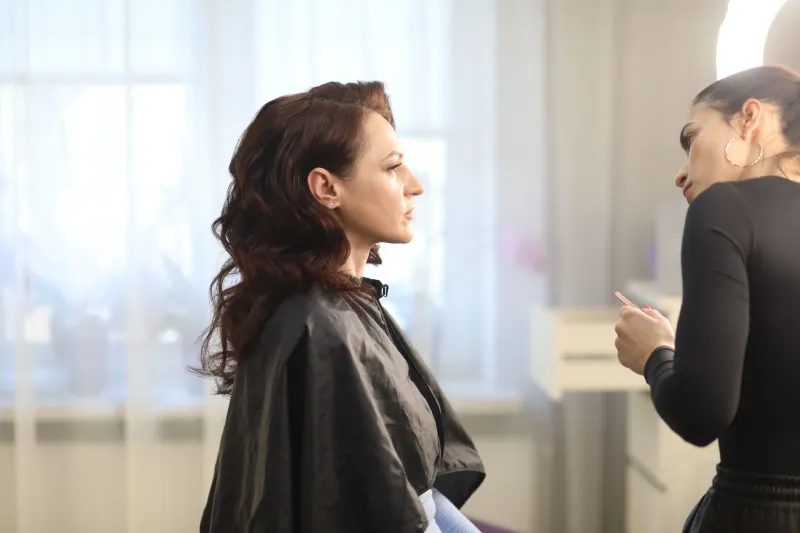
There is a moment — usually within the first five minutes of sitting in a salon chair — when something either clicks or it doesn't. A skilled stylist reaches for your hair almost instinctively, asks the right questions in the right order, and makes you feel as though you've been a regular client for years. For others, the exchange feels transactional, slightly awkward, and ultimately forgettable.
That difference is not accidental. It is the product of a consultation done well — or one that missed the mark entirely. Understanding what unfolds during those early moments, both spoken and unspoken, gives you a meaningful advantage the next time you step into a new salon.
What a Stylist Is Really Observing Before You Say a Word
Before a single question is asked, an experienced stylist has already begun gathering information. The texture of your hair as they lift it gently from your shoulders, the way it catches the light, the condition of the ends, the growth pattern at your temples — all of it speaks before you do.
Professional stylists are trained to assess porosity, density, elasticity, and scalp health almost reflexively. They are noting whether your hair has been chemically processed, whether there are signs of heat damage, and how your natural texture behaves in its current state. This silent audit is not clinical detachment — it is the foundation of honest, personalized advice.
At the same time, attentive stylists are reading broader cues: your posture, your comfort level in the chair, the way you speak about your hair history. Do you seem uncertain? Decisive? Have you arrived with saved images, or are you hoping to be guided? These behavioral signals help a skilled professional calibrate their approach before the real conversation even begins.
The Questions That Separate Good Consultations From Great Ones
A surface-level consultation asks what you want. A genuinely great consultation asks why you want it — and listens carefully to the answer.
Consider the difference between a stylist who says, "So, you're thinking about going shorter?" and one who asks, "What's prompting the change right now?" The second question invites context. It opens the door to understanding whether you're seeking a practical solution, an emotional reset, or simply a refresh that honors what you already love about your hair.
Highly regarded stylists also ask about your daily routine with genuine curiosity. How much time do you realistically spend on your hair each morning? Do you air-dry, diffuse, or reach for a flat iron? Do you travel frequently or work in environments where certain styles are less practical? These answers shape recommendations far more than any inspiration image can.
Pay attention to whether your stylist listens more than they speak during this phase. The consultation is not a performance — it is a dialogue. One-sided enthusiasm, however charming, is not the same as careful attention.
The Unspoken Chemistry of Stylist-Client Compatibility
Professional compatibility is not purely technical. Two stylists of equal skill can produce wildly different client experiences based on something far less quantifiable: relational chemistry.
This chemistry often manifests in subtle ways. Does your stylist maintain appropriate eye contact in the mirror — engaged but not intense? Do they offer their professional perspective with confidence while still making space for your preferences? Are they comfortable with a quiet moment, or do they fill every silence with filler conversation that distracts from the work at hand?
Clients frequently describe their ideal stylist as someone who "just gets it" — a phrase that sounds vague until you examine what it actually means. It means the stylist understood the spirit of what you were asking for, not merely the literal description. It means they translated your lifestyle into a cut that actually works. It means you left the chair feeling more like yourself, not like a slightly altered version of someone else.
That kind of alignment is worth seeking deliberately, rather than simply accepting whoever is available.
Green Flags Worth Noticing
Not every positive sign arrives with fanfare. Some of the most reassuring indicators of a skilled, trustworthy stylist are quiet ones.
Notice whether your stylist is honest about limitations. A professional who tells you that achieving a particular result may require multiple sessions — or that a certain look may not suit your hair type — is demonstrating integrity, not discouraging you. That candor is a significant green flag.
Also observe how they handle your inspiration images. Rather than simply agreeing with everything you present, a thoughtful stylist will discuss which elements are achievable, which may need adaptation, and why. They might say, "I love the dimension in this photo — let's talk about how we can translate that to your texture specifically." That kind of nuanced response signals both confidence and respect for your individual hair.
Finally, notice whether they explain what they're doing as they work. Not in an overwhelming, lecture-like way, but naturally — sharing the reasoning behind a particular technique or product choice. This transparency is both educational and reassuring, and it distinguishes professionals who are genuinely invested in your experience from those simply executing a service.
When the Fit Isn't Right — and What to Do
Recognizing incompatibility early is a form of self-advocacy, not disloyalty. If a stylist speaks over your concerns, dismisses your texture as difficult, or steers the conversation exclusively toward what they prefer to create, those are meaningful signals worth heeding.
The same applies if you leave a consultation feeling confused rather than confident. A great consultation should leave you with a clear sense of the plan, realistic expectations, and a genuine feeling of being understood. If none of those things are present, it is entirely appropriate — and advisable — to seek a second opinion before committing to a significant service.
At a salon environment that prioritizes both technical excellence and client wellbeing, the consultation is treated as the cornerstone of every appointment. It is where trust is established, where expertise is demonstrated, and where the relationship between stylist and client begins to take meaningful shape.
Making the Most of Your Next First Appointment
Arrive prepared, but not overscripted. Bring reference images if they help you communicate, but hold them loosely — they are conversation starters, not contracts. Be honest about your maintenance habits, your budget for upkeep, and the results you've been disappointed by in the past. That candor will serve you far better than an idealized version of your hair goals.
Ask questions freely. What does this service involve? How long will results last? What will the at-home care routine look like? A stylist who welcomes these questions — who answers them thoughtfully and without impatience — is one worth returning to.
The right match is out there. And more often than not, you'll know it in the first five minutes.