From Balayage to Bond Builders: A Clear Guide to Salon Terminology Every Client Should Know
Imagine sitting in the salon chair, listening to your stylist describe a service, and nodding along while privately wondering what half the words mean. It is a more common experience than most clients admit. Professional salon language has its own vocabulary — one developed over decades of technique refinement, product innovation, and industry standardization. Understanding it is not about impressing your stylist. It is about ensuring that what you ask for and what you receive are the same thing.
This guide is designed to close that gap. Whether you are a first-time salon visitor or a longtime client who has simply never asked what certain terms actually mean, what follows is a clear, practical breakdown of the language you are most likely to encounter at a professional salon in the United States.
Color Techniques: More Variety Than You May Realize
Balayage is perhaps the most frequently misunderstood color term in contemporary salon culture. Derived from the French word meaning "to sweep," balayage is a freehand highlighting technique in which color is painted directly onto sections of hair without foils. The result is a soft, graduated, sun-kissed effect with natural-looking dimension. Because it grows out gradually rather than leaving a hard demarcation line, balayage requires less frequent touch-up appointments than traditional highlights — typically every three to four months.
Highlights and lowlights are often mentioned together but serve opposite purposes. Highlights are lighter than your base color and add brightness; lowlights are darker and add depth and dimension. Many stylists use a combination of both to create a result that appears multidimensional rather than flat.
Ombré describes a gradient effect in which hair transitions from a darker shade at the roots to a lighter shade at the ends. It is more dramatic than balayage and involves a more distinct color shift. Clients sometimes use these terms interchangeably, but asking your stylist to clarify which technique best suits your desired outcome can prevent significant misunderstandings.
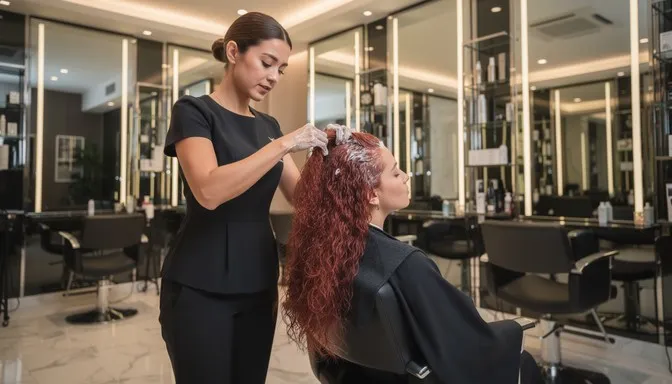
Toning is a step that often follows lightening services. A toner is a semi-permanent color product applied to neutralize unwanted warmth or brassiness — the yellow or orange tones that frequently appear after bleaching. Without toning, platinum and ash blonde results are nearly impossible to achieve. Toners fade over time, which is why stylists often recommend toning maintenance appointments between full color services.
Gloss treatments are sometimes confused with toners but serve a slightly different purpose. A gloss adds shine and vibrancy, can subtly shift tone, and generally wears off within four to six weeks. It is an excellent option for clients who want to refresh their color without committing to a more significant chemical process.
Chemical Treatments: Understanding What Goes Into Your Hair
Keratin treatments — sometimes marketed under brand names such as Brazilian Blowout — are smoothing services that coat the hair shaft with a keratin protein solution, which is then sealed in with heat. The result is reduced frizz, increased manageability, and a smoother texture that can last anywhere from two to five months depending on the formula used and how frequently hair is washed. It is worth noting that keratin treatments do not permanently alter the hair's structure; they work by coating rather than chemically restructuring.
Relaxers, by contrast, are chemical services that permanently break the disulfide bonds within the hair shaft, restructuring curly or coily hair into a straighter form. Because the change is permanent, relaxed hair requires careful ongoing maintenance and regular professional touch-ups as new growth appears. Relaxers and keratin treatments are frequently confused, but they are fundamentally different in both their chemistry and their permanence.
Perms work through a similar bond-breaking mechanism as relaxers but in the opposite direction — they introduce curl or wave into hair that is naturally straight or minimally textured. Modern perms have evolved considerably from the tight, uniform curls of decades past; today's versions can produce loose, beachy waves with a more natural appearance.
Bond builders — products such as Olaplex and its counterparts — are treatments that work at the molecular level to reconnect broken disulfide bonds within the hair structure, reducing damage during and after chemical services. They are not standalone color or straightening treatments; rather, they are protective and restorative agents used in conjunction with other services. When your stylist mentions adding a bond builder to your color appointment, they are offering a form of structural insurance for your hair.
Cutting Techniques: Precision in Every Pair of Scissors
Blunt cuts involve cutting all the hair to the same length, creating a clean, solid line. They work particularly well on thicker hair and tend to make fine hair appear fuller.
Layering removes weight and adds movement by cutting different sections of hair to different lengths. Layers can be long and subtle or short and dramatic depending on the desired effect.
Point cutting is a technique in which the stylist cuts into the ends of the hair at an angle rather than straight across. This softens the perimeter and adds texture without reducing length significantly.
Texturizing refers broadly to any technique used to remove bulk or add dimension to the hair. It may involve thinning shears, razors, or specialized cutting methods depending on the hair type and desired result.
Skin and Scalp Services: Beyond the Basics
Face contouring in a hair context refers to the strategic use of haircut shape, color placement, or styling techniques to complement and enhance the natural structure of a client's face. It is not a single technique but rather a philosophy of service that considers the relationship between hair and facial features.
Scalp treatments address the health of the scalp itself rather than the hair strand. They may involve exfoliation, hydration, or targeted serums designed to address concerns such as dryness, excess oil production, or thinning. A healthy scalp is the foundation of healthy hair, and many stylists now incorporate scalp analysis into the consultation process.
The Value of Speaking the Language
Knowing the difference between a gloss and a toner, or between balayage and ombré, is not merely academic. It is practical. Clients who can articulate what they want — and who understand what their stylist is proposing — are far less likely to leave an appointment disappointed. They are also better equipped to evaluate whether a recommended service is appropriate for their hair's current condition and their budget.
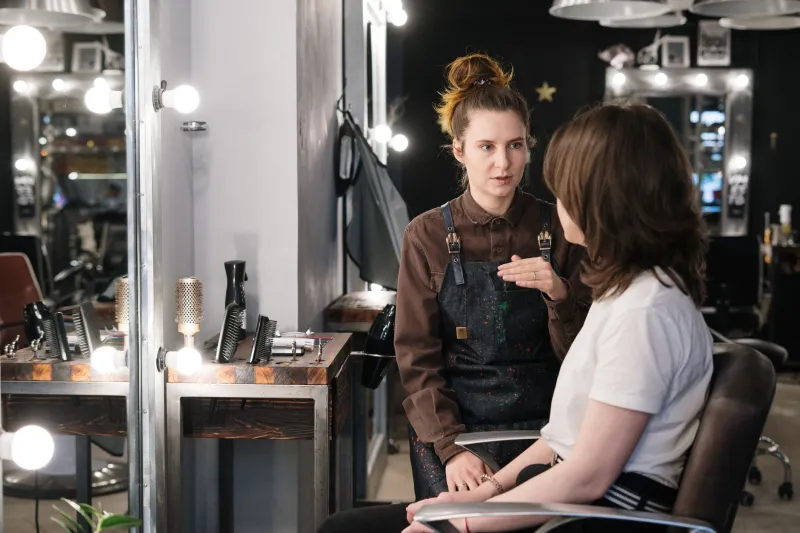
At Belsi Salon, every service begins with a thorough consultation precisely because clear communication is the foundation of an exceptional result. The more fluent you become in the language of professional beauty, the more productive that conversation becomes — and the more confidently you can invest in services that truly serve you.